
The Eleventh Edition
Notes from the years the definitions went missing

The Eleventh Edition came to us in March, in the grey vans, and I helped unload my share of the crates with Pomfret, who talked about his back the whole time. That is the first thing I want to put down, because afterwards everyone behaved as though the books had simply appeared, grown out of the shelves overnight. I was there. They came in vans. A man signed for them. The man’s name was Edge, which I remember because it seemed the wrong name for someone so soft and apologetic.
I worked then in the room they called Verification, on the fourth floor of the Lexical Office, though almost nothing was verified there in any sense you would use the word at home. We checked the proofs against the slips. The slips came up from the basement in a lift the size of a hatbox, and you matched the printed entry to the slip, and if they agreed you initialled the corner and sent it on. I was good at it. I will say that much for myself, even now. I had a feel for when a comma had wandered.
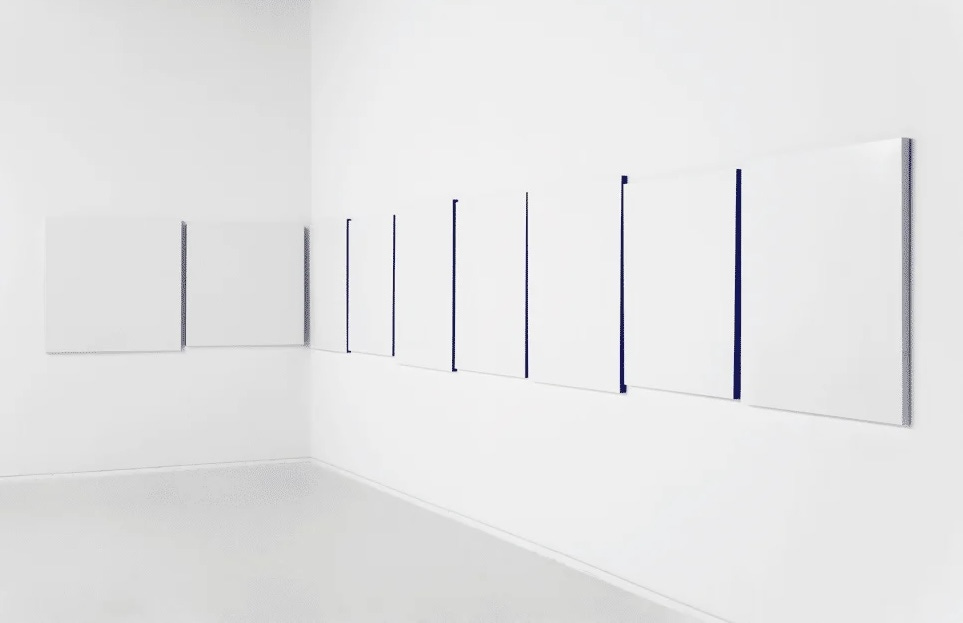
The blank entries I found in the first week. Not all at once. The word “obrene” was the first, I think, or it might have been “scantle”; the order has gone soft in my head. The headword sat there in its bold type. Below it the part of speech, the little italic n. or v. After that, where the meaning should have been, nothing. Not a gap left by careless setting. The space had been measured and kept. Somebody had decided how much white to leave for a definition, and then left exactly that much white, and put no words in it.
I took it to Mrs Aldous, who ran the floor. I expected her to be annoyed, which she usually was, about everything, the heating, the slips, the lift that stuck, the younger ones saying “no worries” instead of answering a question. She looked at “obrene” for a while. Then she said the errata would cover it. There would be an errata sheet, she said, posted in due course, and until then I was to initial the entries and pass them on like any others. I said you could not pass on an entry that had no meaning in it. She said I could, and that the meaning was not my department. I have thought about that sentence more than I have thought about most things.
The errata sheet did not come that month, or the next. What came instead, and this is the part I find the hardest to explain to people who were not adults at the time, was the words being used. “Obrene” first, out in the street, on the wireless. A minister used it. I heard him. He was talking about the grain quotas and he said the situation was, in his word, obrene, and the men around the table nodded, and the camera held on them nodding, and nobody asked. Why would they ask. To ask would be to admit you did not know, and the whole trick of it, the engine of the thing, was that nobody could be sure anybody else did not know either.
Here is the plain version. A word with a fixed meaning can be used wrongly. You can be corrected. Someone can open the book and point. A word with no meaning cannot be used wrongly, because there is no right, and so it became the safest kind of word to use, the only fully safe word, and people are not stupid, they reach for safety. You said obrene when you did not want to commit yourself to a thing. You said scantle when you wanted to seem to have decided something without the bother of deciding it. Children got hold of them off the floor, the same as they get hold of everything else, and never asked what they were for.
The meetings changed first. I am told they changed everywhere but I only saw ours. A man would stand and speak for ten minutes and four of those minutes would be the new words, and you came away unable to disagree because you could not say what had been claimed. Then the accusations. Because here is the other side of a word that means nothing: it can be made to mean anything, afterwards, by whoever is standing nearer the door. Pomfret was let go for being obrene. That was the charge. Nobody laughed. By then it was the autumn, and laughing at it had stopped being something people did, somewhere between June and September it had silently become a thing you did not do, and I could not tell you the day.
There was a tribunal for a while, on the ground floor, though it was not called that. A man I knew slightly from the bus, Garrod, was brought up in front of it. I went and sat at the back, I am not certain why, curiosity, or the bus thing. The charge against him was read out and I have it more or less: that on the fourteenth he had been scantle in a manner prejudicial. Garrod stood up and said he had not. He said it plainly and you could see he believed it. The trouble was he had no more idea than the rest of us what he was supposed not to have been, so his defence kept sliding, he would deny the thing and then in the next breath half admit it, because how do you keep your feet denying a charge you cannot picture. They found against him. Of course they did. I do not know what became of Garrod and I have not gone looking, which I notice about myself and do not much like.
The forms were the worst of it for ordinary purposes. You went to the housing office to ask about the damp coming through the back wall, real damp, you could put your hand on it, and the woman behind the glass would give you a form, and the form would ask you to state whether the dwelling was obrene under section four, yes or no, and there was no third box for “I cannot say, because nobody can”. So you ticked one. Everybody ticked. I ticked yes once and no the next time on an identical wall, to see, and nothing happened either time, which told me the box did not feed into anything, or fed into something that also could not read the word, and we were all of us posting letters into a wall.
I tried, once, to find out what obrene had meant. If it ever had. I went down to the basement on a Saturday, which you were not supposed to do, and I found Tilley among the slip drawers eating a sandwich he should not have had down there either, egg, I remember the smell. I asked him to pull the slip for obrene. He pulled it. The slip had the headword and the little n. and then the space, the same measured space, blank on the slip as in the book. So it had been born blank. There had not been a meaning that got lost. The meaning had never been written. Somebody had ordered the word and not the sense of it, and the order had been carried out exactly, as orders are when nobody wants to be the one who queried them.
The old ones were no help. I asked my aunt, who had been a schoolteacher and was proud of it and would tell you so before you had sat down. She said of course obrene meant something, everyone knew what it meant, and then she could not say what, and got cross with me as though I had taken it off her, and we did not speak for a month over a word neither of us could define. That happened a lot. People defended the meaning of words ferociously while being entirely unable to produce it. You would think the inability would have shamed them into doubt. It did the opposite, or near enough. The less anyone could say what a word meant, the surer they got that it meant a great deal, which I have never understood and have stopped trying to.
They taught the words in the schools, eventually, which I suppose was bound to happen. Not the meanings. There were no meanings to teach. They taught usage. My niece, my cross aunt’s granddaughter, came home able to use scantle in nine constructions and could not tell me what it pointed at, and when I pressed her she looked at me with real pity, the pity the young keep for the old who have not kept up, and she said “you do not need to know what it means, you need to know how to use it, and where to put it, and which sort of person says it and which sort does not”. She was nine. She was not wrong about the world she had been handed. I have thought since that she understood the new order better at nine than I did at forty, and that this is roughly what it costs to grow up sane inside something mad: you learn the rules of the madness early and you stop noticing they are mad, and she will teach her own children the words and not think twice, and that is how a thing like this stops being news and turns ordinary, the sort of fact people stop mentioning because everyone is already standing in it.
Edge, the soft apologetic man who signed for the crates, I saw him again about a year on, in the queue at the chemist. He looked thinner. He recognised me, which surprised me, and he leaned in close and said, quietly, as if confessing something, that he had read the whole of the Eleventh, cover to cover, on his own time, trying to find one definition the printers had left in by mistake. One. A single word done properly, that would prove the rest a fault and not a policy. He did not find it. He told me this with his prescription bag in his hand and his eyes wet, and I did not know what to say, so I said something with one of the words in it, I am ashamed to report, because it was the only thing to hand that would not require me to feel anything, and he nodded, comforted, and that was the last I saw of him.
My husband used the words. I want to be careful here… He was not a fool, and I will not have it written down that he was. He used them because the rain was coming down and an umbrella was an umbrella. We had an argument late on, near the end of us, in which he told me I was being obrene about the whole business, and I asked him what he meant, and he said I knew very well what he meant, and the awful thing, the thing I have not got to the bottom of, is that he was right. I did know. Not what the word meant. What he meant by it. Which is not the same and turned out to be enough to run a marriage into the ground on.
You will want me to tell you it was done on purpose. That somebody high up planned it, that there was a reason behind it, a benefit to someone somewhere, some man in a good coat who wanted the country quiet and had worked out that a people who cannot say what they mean cannot say much against you either. Maybe. I have no slip to pull on that one. What I can tell you is smaller and worse. It did not need a plan. Once the first blank word was loose and got away with being used, the rest followed because it was easier, and easier is a current, and we all of us drift downstream when the alternative is to keep saying “I do not understand you” to everyone you meet until you are alone.
I still have my copy of the Eleventh. It is on the shelf with the others, and I take it down sometimes, not often, and I turn to obrene and look at the space under it, and I will be honest, some evenings the space looks like exactly what it is, an absence, a thing left out. Other evenings, and I am less proud of these, it looks restful. A clean white field with nothing in it to disagree with. I have caught myself reaching for the word in my own head, when I am tired, when defining the thing properly would take effort I have not got. The minister was obrene. The grain was obrene. My aunt, the egg sandwich in the basement, the vans in March, the whole of it, the. I do not finish the sentence.
I used to think the danger was that the words meant nothing.
Lately I think it was that they were so comfortable to hold, and how light a thing it is, in the end, to stop asking, and I have not decided, I have genuinely not decided whether I am warning you or only telling you where the cupboard is.
Tamara Arden – T;A
Not a tip jar. A ledger for what you underlined in your mind.
The Semicolon Affair exists because of its readers. If you want to be part of it, subscribe or upgrade, I’d be glad and grateful to have you.
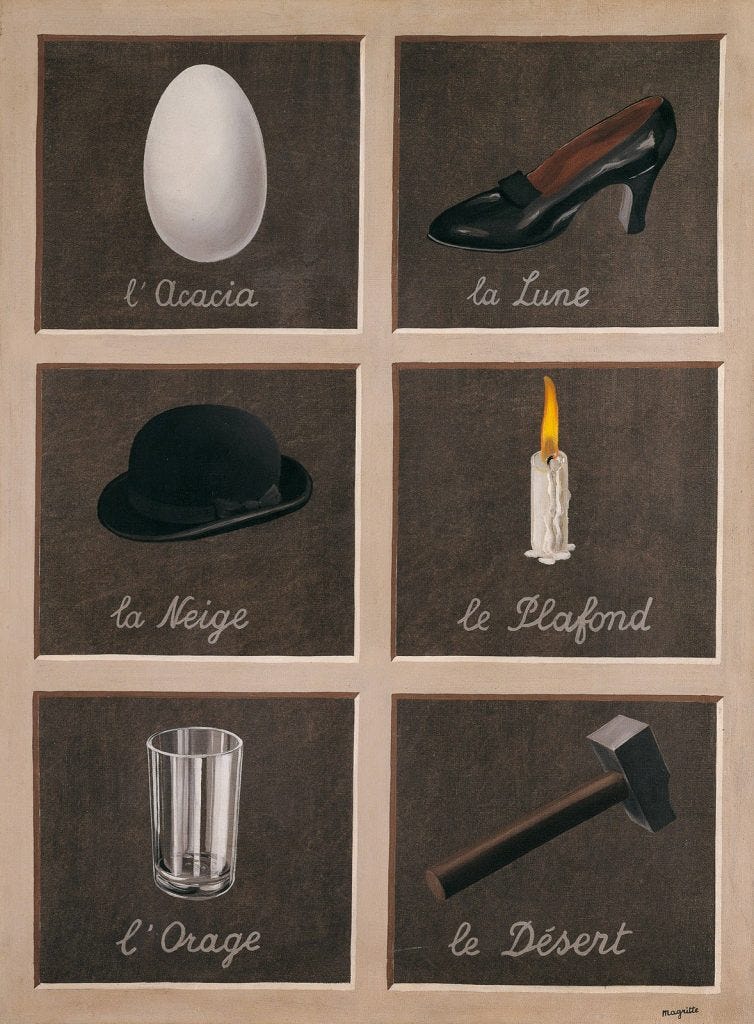
“The question is”, said Alice, “whether you can make words mean so many different things.”
“The question is”, said Humpty Dumpty, “which is to be master, that’s all.”
— Lewis Carroll, “Through the Looking-Glass”
Did you speak to Syme about the Eleventh? Winston tells me he is the expert, having compiled it almost by himself. Or is he an unperson… or have I got the wrong speculative-fiction, cinematic universe?
What a triumph your writing is to make administration of book so enthralling and oddly rapid… a great feat thinking about how much laborious, hand wringing goes into developing this kind of document.
Such a specific look into the bizarre meta lexicography of compiling meaning is no easy thing to make so compelling. Nowadays words gather meaning from momentum and usage and above all memeability (which may or may not be a word, let me consult my one chosen source of truth: Urban Dictionary). The words we see today might as well be blank, though nowadays there isn’t much interest in such open possibility. Someone rushes to fill everything with meaning. And how we agree to it is by fiat if the algorithms that allow for its spread.
Whether old or new, the way meaning is derived through lexicography or a man named Alex or jammed minced garlic and jar together to create ‘Jarlic’, is infinitely fascinating. And in your hands this story feels like it could have been a fascinating chapter in a larger text… or as we have it here, a standalone piece carrying its own unique meaning.
It seems we have uncovered the darker side of The Graile Affair. Is it possible this may become known as The Voss Conspiracy? And how dark do you think it's going to get? Or is it sprine and we just don't see it yet? Obrene doesn't seem to have the gentle simplicity of plenivar. There is something a little more dangerous in its usage - or is that scantled thinking? Hmmm.